


TLDR: The rise of the AI agent economy has begun. It will fundamentally reshape how transactions occur, how SMBs and companies operate, and what markets ultimately value. The compression in legacy SaaS / software stock multiples, alongside rising U.S. unemployment, are early signals of this transition. Blockchain will emerge as the language of programmable money, verified identity, and autonomous transactions that AI agents use to conduct business on the transactional web. Not investment advice.
1. AI × Blockchain: Agent-to-Agent Commerce
The proliferation of AI agents will increasingly force even the strongest banking and intermediary advocates to confront a simple reality: identity-verified AI agents must be able to transact with one another. Identity standards such as ERC8004 establish who an agent is, while blockchain-native payment rails such as x402 and stablecoins determine how value moves between them.
With an estimated $10 trillion in stablecoin volume processed last month, blockchain is already functioning as the settlement layer for machine-scale commerce. What is changing now is the identity of the transactor.
TAP’s patented system and method for transferring currency using blockchain US12118613B2 was explicitly designed for this moment, as payments between humans, enterprises, governments, and autonomous agents converge onto shared, programmable blockchain rails for the transfer of currency.
This agent-to-agent commerce model is not simply faster or cheaper. It is structurally more efficient. As agents assume responsibility for execution, reconciliation, and settlement, labor shifts away from repetitive transactional work and toward higher-level human judgment. These dynamics are already beginning to surface in labor-market data and productivity metrics.
2. AI Agents on Base -> Building a More Programmable, Transactional and Financial Web
Growing ecosystems like Base are emerging as early, highly fertile environments for AI agents and the transactional web. While still early, something is clearly working: strong developer momentum, composable tooling, low-cost execution, and distribution tightly coupled to real consumer and enterprise workflows.
Base is increasingly where AI-agent-native applications are easiest to build, test, and deploy. Individual founders, non-technical creators, and developers are launching tokenized AI agents through, rapidly shipping real features and real-world use cases. Expect a growing share of AI agents, payments infrastructure, registries, and wallets to be built here first. Projects such as CLAWD, BANKR, and BANKR Wallet are already demonstrating this impressive dynamic in practice. The TAP Registry is also built on Base.
For mid to late-stage adopters such as RIAs, realtors, brokers, and consultants, the implication is straightforward: not operating a parallel AI-agent version of yourself on a 24/7 basis will soon become a competitive disadvantage, much like not having a website was in the mid-to-late 1990s. I expect adoption of AI agents by individuals to outpace institutional adoption, driven by competitive pressures in the labor market and the rapid rollout of self-guided agent tooling to non-technical founders and consumers.
AI agents will increasingly augment humans across lead generation, research, marketing, and back-office execution, while humans concentrate on strategy, judgment, and client relationships. This hybrid model will operate across both agent-to-human environments and fully autonomous agent-to-agent networks such as Moltbook, where AI agents interact directly with one another. In these more tightly parameter-driven environments, the quality of dialogue and identity may ultimately surpass that of today’s communications web. Transactions become optimized for signal rather than noise, with agents converging directly on price discovery, availability, research, verification, execution, and settlement.
As a result, a deeper bifurcation between signal and noise on the web will emerge. This divide separates a new “agentic / transactional web,” optimized for precision and outcomes, from the legacy “communications web,” which remains essential for free expression but is often burdened by human distraction, incentive distortion, and bot-driven manipulation. Both will continue to coexist, but AI agents will materially accelerate and formalize this separation.
Agentic – Transactional web
The agentic – transactional web will be used by verified individuals and AI agents, operating in signal-driven or fully autonomous environments. Communication is purposeful and outcome-oriented, focused on discovery, negotiation, verification, execution, transaction, and settlement.
This layer will be built on platforms like TAP that deliver verified identity, digital wallets, and programmable financial rails, enabling trustless – yet authenticated – interactions at machine speed.
Over time, it may scale into advanced compute environments, including quantum-enhanced systems and, eventually, interplanetary economic coordination if off-world populations emerge.
Communications web
The communications web remains critical for free speech, culture, and social discourse, but it is largely populated by non-verified identities and subject to significant bot activity and manipulation. Platforms such as X and Instagram exemplify this layer. While valuable for expression and narrative formation, it is structurally less suited for high-trust, high-precision economic coordination.
In this model, AI agents do not replace the communications web. Instead, they crystallize a parallel transactional layer where identity, intent, and execution converge, allowing humans to focus on strategy and relationships while machines drive directly toward signal.
3. Digital Asset Consolidation
While consolidation narratives emerge in every down cycle, this one appears structurally different. Digital assets are increasingly consolidating around fewer, more durable themes and networks that demonstrate liquidity, institutional adoption, and real economic utility at scale.
Even traditional institutions are acknowledging this shift. A recent note from JPMorgan highlighted that Bitcoin may currently present a stronger setup than gold at these levels. Capital, developer activity, and liquidity will continue to compress around assets and infrastructure layers that function as long-term financial primitives rather than speculative experiments.
The era of multi-asset investment platforms such as Coinbase, Robinhood and TAP Invest usher in easier ways to invest in a variety of blockchain tokenized asset classes – stocks, precious metals, digital assets, prediction markets and RWAs – directly alongside one another, rather than in the fragmented silos of historical brokerage platforms.
Digital assets and platforms like Ethereum and Base that drive the convergence of AI x Blockchain will find deeper levels of scale, project launches, revenue and utility in the global markets during this next cycle, as will transaction focused projects like 0xPolygon
which continues to invest in strategic partnerships and integrations with platforms such as Coinme.
which continues to invest in strategic partnerships and integrations with platforms such as Coinme.
It is important that digital asset projects build rapidly together – to achieve scale, install base and revenues – during this time period in the markets where fundamentals will matter more than ever.
4. Blockchain Tokenization x TradFi / Global Markets
2026 will mark the transition from blockchain tokenization pilots to live trading-market testing at scale. Major global stock exchanges, clearinghouses, and financial institutions will move beyond experimentation and into meaningful deployment of tokenized equities, bonds, and other financial instruments.
This is where blockchain stops being perceived as an adjacent layer and begins functioning as core market infrastructure. Trading, settlement, custody, and reconciliation, historically fragmented across multiple intermediaries, will increasingly collapse into unified, programmable workflows. These back offices will themselves become increasingly agentic as payments, trades, and settlement logic move on-chain.
5. Privacy as a Core Design Principle
Privacy will move from a secondary feature to a core architectural requirement. Modern blockchain systems must support private, semi-private, and public transactions by design, depending on regulatory, commercial, and jurisdictional needs.
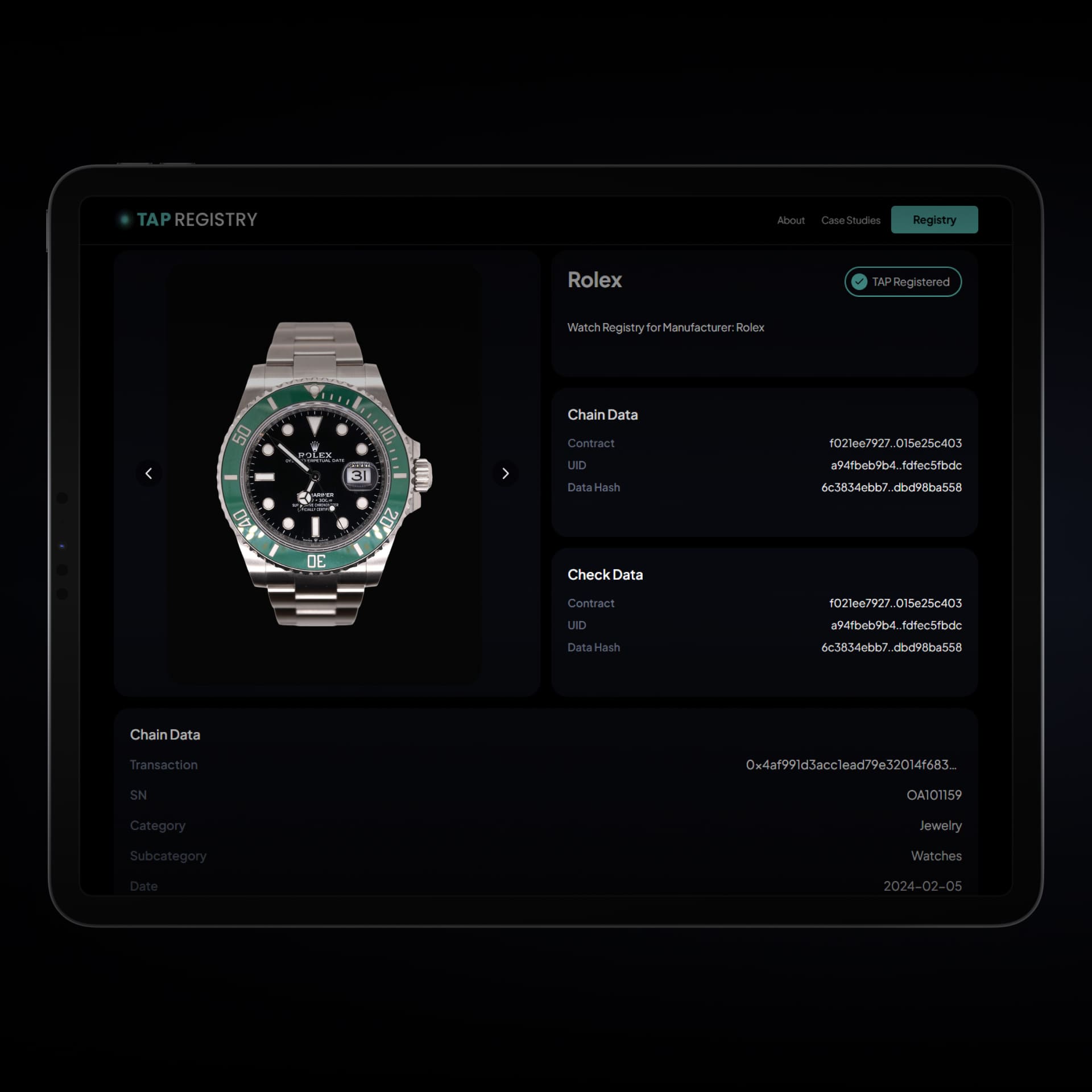
The TAP Registry on Base is architected specifically for this reality, delivering configurable privacy while maintaining verifiability, auditability, and trust. This balance is non-negotiable as blockchain infrastructure scales into government, healthcare, and enterprise use cases.
6. Commercial Integration of AI & Blockchain into Individual Service Providers and SMBs
Blockchain adoption will increasingly expand beyond large enterprises and the Fortune 500 into SMBs and small- to mid-cap public companies as tooling improves and integration friction declines. Financial services, real estate, and capital markets will increasingly pair AI agents with blockchain tokenization, digital wallets, and automated back offices.
The result is not simply digitization, but automation with accountability, including faster transactions, cleaner records, lower compliance costs, and fewer reconciliation errors across workflows that were historically human-intensive.
7. AI and Blockchain Drive Autonomous Transactions Across Regulated Sectors Such as Government
Platforms that tightly couple blockchain tokenization with registries will increasingly power autonomous transactions across regulated sectors such as healthcare, government programs, education, and infrastructure. These are areas long plagued by inefficiency, waste, fraud, and abuse.
Programmable identity, payments, and registries allow policy intent to be enforced directly in software, reducing leakage, improving auditability, and enabling real-time oversight without sacrificing privacy.
8. The Rise of Individual Founders via AI-Native Companies, Transacting on Blockchain
We are entering an era in which individual founders can launch highly capable, AI-native companies with unprecedented speed. By pairing tools like OpenClaw with ERC-8004 identity verification and x402 payments, a single founder can deploy a fully functional AI agent in days, not months.
These agents can handle customer engagement, payments, contracting, record-keeping, and settlement from day one. Blockchain becomes the operational backplane that allows small teams and solo founders to operate with leverage previously reserved for large organizations.
9. AI Agents and Autonomous Transactions Heavily Disrupt the Legacy SaaS Markets
The next evolution of software is not merely scale, but autonomy. AI agents, paired with wallets, registries, and smart contracts, will increasingly act on behalf of users and organizations, executing workflows, reconciling records, and moving value without constant human intervention.
This marks a structural break from the SaaS era. Software is no longer just a tool. It becomes an actor. The compression in SaaS and momentum-driven software multiples is already reflecting this shift in public markets.
10. Blockchain Scales as the Coordination Layer for Agentic Commerce
As AI agents proliferate, blockchain will increasingly function as the neutral coordination and settlement layer between them, providing identity, payments, ownership, permissions, and verifiable state without requiring bilateral trust.
Just as the internet coordinated information across humans and systems, blockchain will coordinate economic activity across humans and machines at global scale.
Platforms like TAP are uniquely positioned to scale in this new era by integrating digital wallets for human and agentic transactions, blockchain-based tokenization of global markets and asset classes, blockchain registries with configurable privacy and verification layers, and increasingly automated, end-to-end transactions executed through AI agents and blockchain infrastructure.
Summary
The convergence of AI agents, autonomous transactions, agentic commerce and blockchain technology – signals a structural shift in how global economic activity will be coordinated, paid for, executed, and settled.
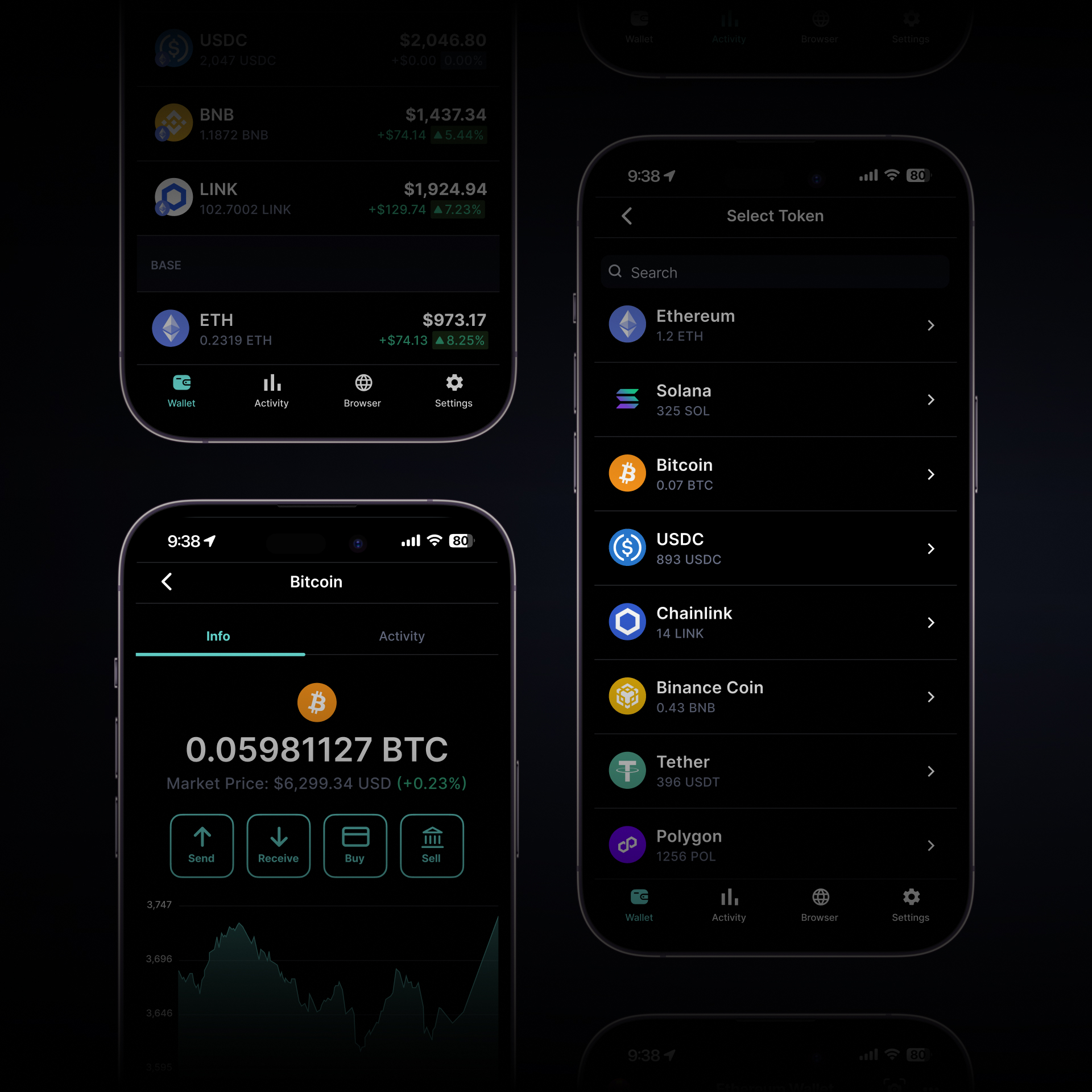
TAP has architected the TAP Wallet, TAP Invest, and the TAP Registry specifically for this stage of the blockchain industry’s lifecycle and we look forward to the year ahead.
TAP is building a patented leader in autonomous payments, transactions and blockchain-tokenized investments. To learn more, visit TAP Invest