


TLDR-Bike theft is a multi billion dollar problem in part because stolen bikes are often easy to resell and difficult for buyers to verify. TAP Registry is designed to help reduce this risk by creating tamper evident ownership records on the blockchain that can be linked to a bike via QR code or NFC. These records allow anyone to check whether a bike is registered or has been reported stolen, while keeping owner identity private.
The Growing Bike Theft Problem
E bike and bicycle theft has become a significant and persistent issue, costing owners and insurers billions of dollars each year. High value e bikes, often priced between two thousand and five thousand dollars or more, are attractive targets because they can be resold quickly, frequently through online marketplaces. Recovery rates remain low, often cited at under five percent, highlighting how challenging it can be to identify and reclaim stolen bikes once they change hands.
Many marketplaces host legitimate sellers and bad actors side by side. Buyers typically have limited tools to determine whether a bike is legitimately owned or stolen. While serial number registries and city level bike registration programs exist, they are fragmented, inconsistently maintained, and rarely interconnected.
How TAP Registry Helps Address These Gaps
TAP Registry provides a blockchain based registration system on the Base network that creates tamper evident ownership records. These records are designed to improve transparency, support verification, and assist recovery efforts rather than relying on isolated databases or paper documentation.
The Bike Theft Landscape
E bike and bicycle theft represents a multi billion dollar criminal industry operating through online marketplaces and organized theft rings. High value bikes attract professional thieves who can resell stolen property quickly with relatively low friction. Recovery statistics underscore the challenge, as fewer than five percent of stolen bikes are typically returned to their owners.
Legitimate sellers and thieves often list bikes on the same platforms, leaving buyers with no reliable way to distinguish a legitimate sale from stolen property. Manufacturer registries and local bike registration programs may exist, but they do not interconnect. A bike stolen in Berkeley and sold in Oakland may not appear in the buyer’s local database, creating gaps that can be exploited.
How TAP Registry Works for Bikes
 Registration on Base Blockchain
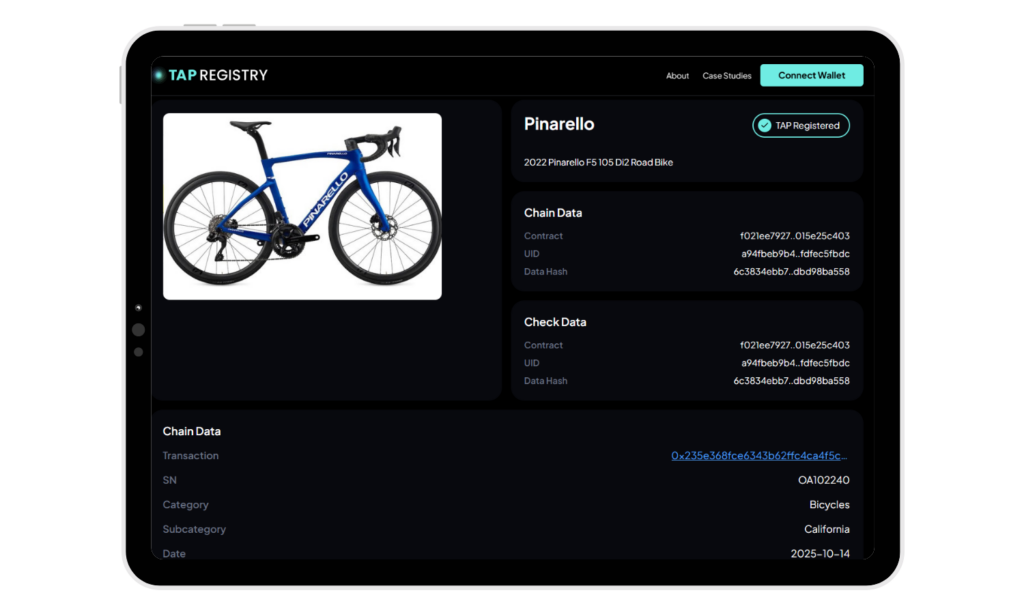
TAP Registry creates blockchain certificates on the Base network, Coinbase’s Ethereum Layer two blockchain, which offers fast and affordable transactions backed by Ethereum security. Each registered bike receives a unique identifier via QR code or NFC tag that links the physical bike to its digital record. The blockchain certificate is designed to persist over time and provide a consistent reference point for verification.
Two Layer Data Architecture Public vs Private
TAP Registry separates public verification data from private owner information.
Public Metadata Visible to Anyone
• Contract address on the Base blockchain
• Cryptographic data hash
• Blockchain network Base
• Registration date
• Theft status flag if reported stolen
• Police case number if reported stolen
• Police department and officer information if reported stolen
• Serial number if reported stolen
• Blockchain transaction history
This public information allows prospective buyers, finders, and authorities to assess registration status and theft reports. A buyer can scan the identifier, compare the visible serial number to the physical bike when applicable, and see whether the item has been reported stolen along with relevant police case details.
Private Metadata Visible Only to the Owner
• Owner name and contact information
• Serial number
• Purchase details and receipts
• Personal notes and documentation
During a legitimate sale, the owner can share relevant private details to demonstrate lawful ownership and then transfer the asset through a blockchain recorded ownership update.
Real World Example Berkeley E Scooter Theft
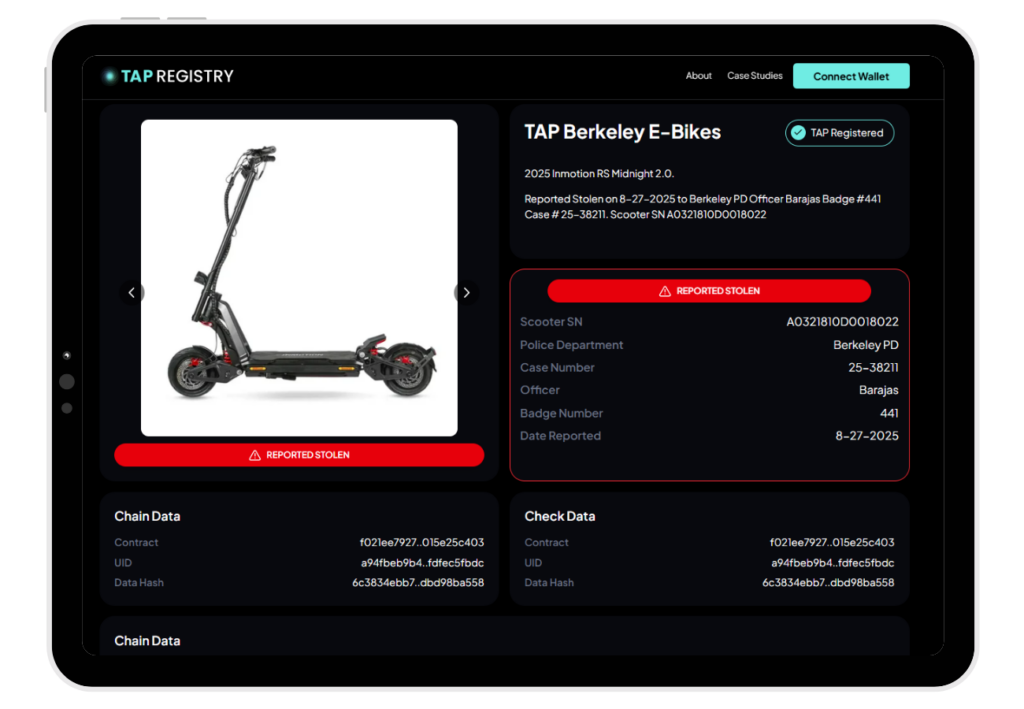
On August twenty seven twenty twenty five, a twenty twenty five Inmotion RS Midnight two point zero electric scooter was reported stolen to the Berkeley Police Department. The theft report was recorded in TAP Registry, creating a permanent blockchain linked record visible to anyone who scans the scooter.
Public Information Visible to Anyone
• Status reported stolen
• Scooter serial number A0321810D0018022
• Police department Berkeley Police Department
• Case number 25-38211
• Officer Barajas
• Badge number 441
• Date reported August 27 2025
• Registry ID TAP101411
How This Can Reduce Unauthorized Resale
If someone attempts to sell this scooter on Craigslist, Facebook Marketplace, or another platform, potential buyers can scan the TAP Registry identifier and see the reported stolen status, the Berkeley Police Department case number, officer details, and the serial number for cross checking. Informed buyers may choose not to proceed with the purchase.
If a person encounters the scooter abandoned or suspects it may be stolen, scanning the identifier provides clear guidance on how to contact Berkeley Police Department with the appropriate case number, supporting potential recovery.
Comparison Registered vs Unregistered
Without TAP Registry
• Buyer has limited ability to verify legitimacy
• Finder cannot easily identify theft status or contact police
• Stolen bikes may be resold through standard channels
• Owners often have limited documentation to support recovery
• Police may lack accessible proof of ownership
With TAP Registry
• Theft status and police case information are visible
• Finders can identify reported theft and contact authorities
• Serial numbers can be cross checked
• Owners have blockchain based proof of registration
• Police have case numbers linked to a specific registered item
Deterrence and Buyer Confidence
Unregistered bikes can be appealing theft targets because resale typically involves fewer checks. Registered bikes may be less attractive to thieves because buyers can quickly verify registration and theft status. Informed buyers increasingly scan before purchasing. Clear registration records can improve buyer confidence for legitimate sales and encourage caution when red flags appear.
Selling a Registered Bike
When selling a registered bike legitimately, the buyer scans the QR code to view registration status and confirms the serial number matches the physical bike. The seller can share relevant private ownership details to demonstrate legitimacy. Ownership is then transferred through TAP Registry, with the blockchain recording the change and transferring provenance to the new owner.
Registered bikes may be viewed more favorably by buyers who value transparency and verifiable history. Professional bike shops, consignment platforms, and informed individual buyers increasingly expect digital authentication.
Build Using Base
TAP Registry operates on Base, Coinbase’s Ethereum Layer two blockchain, offering
• Fast transaction confirmations
• Economical fees that make registration practical
• Ethereum level security through cryptographic proofs
• Publicly verifiable records without reliance on a single private database
For E Bike Owners
Registered bikes receive blockchain certificates linking the physical item to a digital record. Anyone can scan the bike to view registration status and transaction history, while private owner information remains accessible only to the owner.
If Theft Occurs
Owners report the theft to their local police department and obtain a case number, then submit those details to TAP Registry. A reported stolen flag is added to the bike’s blockchain record, making police case information visible to anyone who scans the bike.
For Manufacturers and Bike Shops
Manufacturers and bike shops can integrate TAP Registry authentication into inventory, sales, and post sale processes. TAP Registry supports a wide range of business and enterprise use cases.

How does TAP Registry mitigate e bike theft?
TAP Registry creates persistent blockchain records on the Base network that improve transparency and verification. Buyers scanning a registered bike can see registration status and whether it has been reported stolen, along with police case information when applicable.
What information is public vs private?
Public data includes blockchain details, registration date, transaction history, theft status, and police case information when reported. Private data includes owner identity, contact details, serial numbers, and purchase receipts, visible only to the owner.
What happens if my registered e bike is stolen?
After reporting the theft to police and obtaining a case number, owners can update TAP Registry. A reported stolen flag and police case details become visible to anyone scanning the bike, helping others recognize and report it.
Can TAP Registry be used for any bike or e bike brand?
Yes. TAP Registry supports bicycles, e bikes, and electric scooters from any manufacturer, including road bikes, mountain bikes, and scooters. Examples include Pinarello road bikes and Inmotion electric scooters.